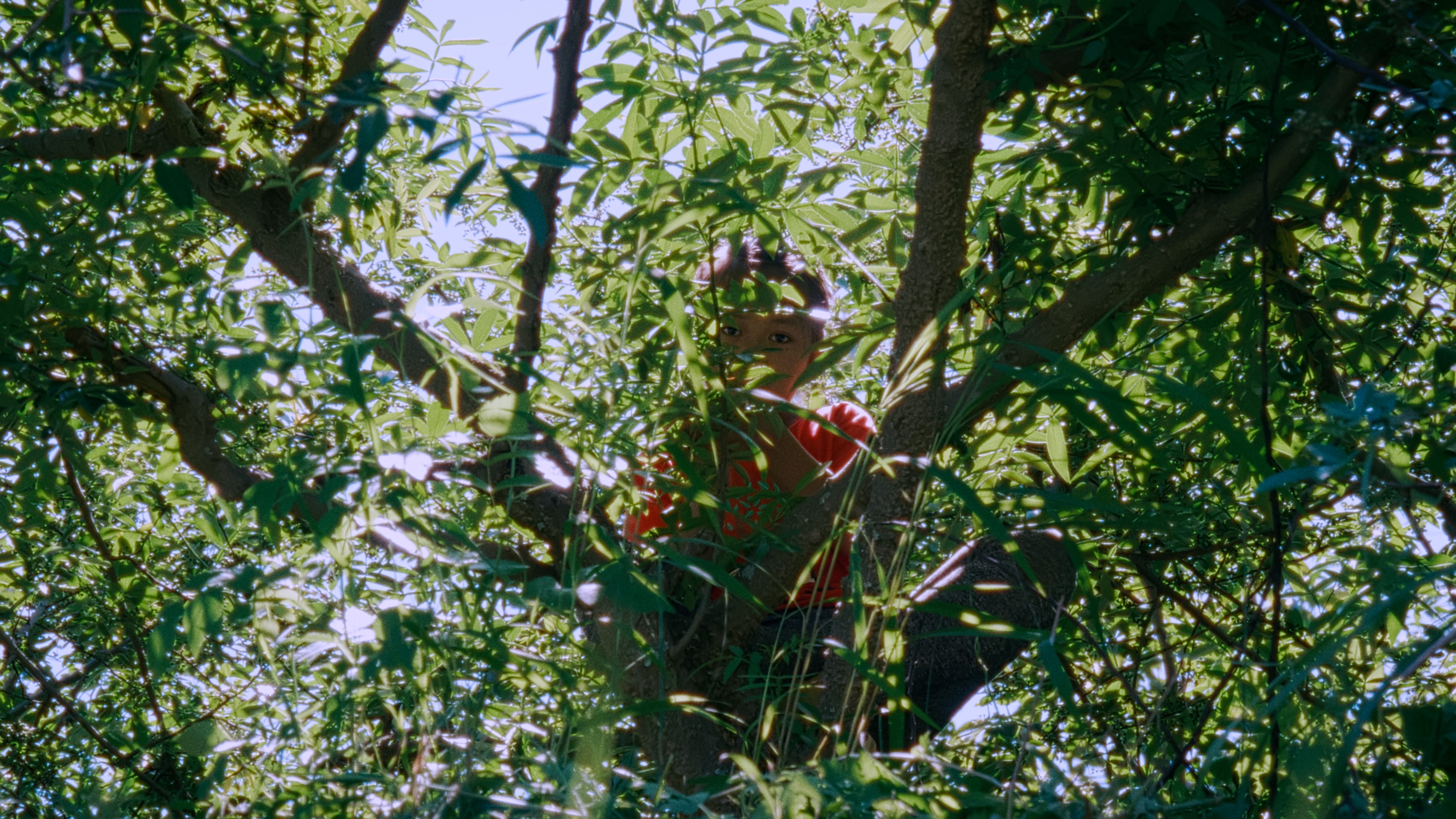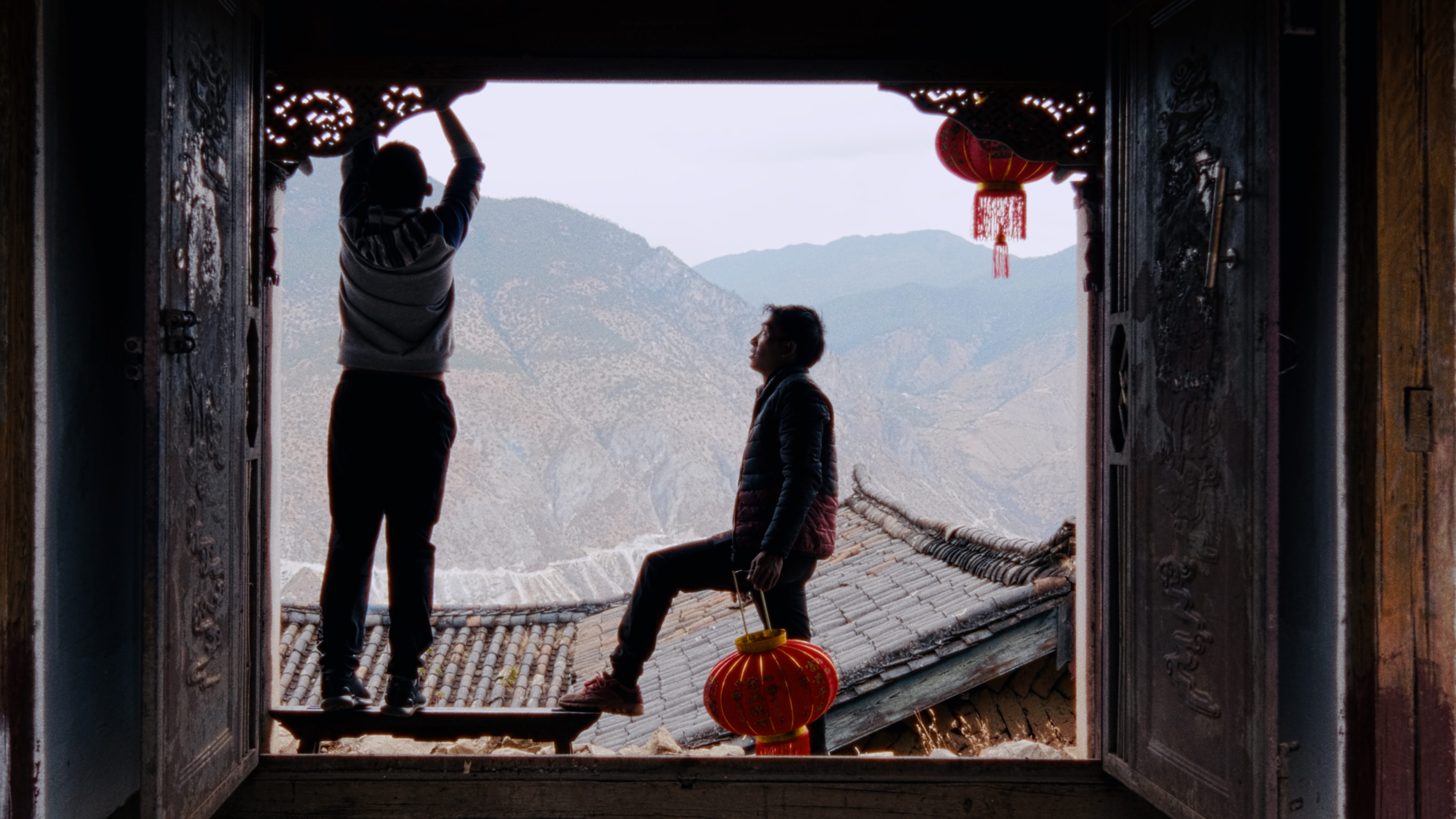
• The filmmaker and the flâneur—In conversation with Shirley Yumeng He

    Filmmaker Shirley Yumeng He’s latest work, The Other Side of the Mountain, was set in motion after she happened upon a salient image during a trip to China: a mountain where one side was lush with trees and the other side was a bare, rocky surface, seemingly forgotten after some construction. He’s film is a meditation on finding one’s way home to Chongqing and what’s left behind or forgotten in the midst of rapid urbanization, where decadence and abundance are found side by side. I had the opportunity to interview her about her film and creative processes recently, and I’m delighted to share our wide-ranging conversation, which took place over e-mail over the past few weeks.

    Anqi Shen: I’d love to know what’s giving you energy right now in your artistic practice. Where in the world are you currently?

    Shirley Yumeng He: I’m currently in Beijing, about to celebrate the Spring Festival with my family after 8 years being abroad! Right now, what’s giving me energy in my artistic practice is the process of reconnecting ç with people, places, and even parts of myself. Fresh out of grad school, I’ve taken a step back to spend time with my family in my hometown, a place I was away from for many years. This time has been both grounding and creatively rejuvenating, as I’m seeing familiar things — places, routines, relationships — in a new light. There’s also a lot of nostalgia since many have changed.

    I’ve also recently come to recognize how important habitual practices are for me to generate creative energy. Maintaining simple daily rituals — morning writing, reading throughout the day, and finding a balance between solitude and social time, filmmaking and other hobbies — has been essential to my creative flow. Admittedly, this hasn’t always been easy with frequent moves and transitions, but anchoring myself in these routines has been key to sustaining my energy and staying connected to my work.

    AS: That’s lovely. We share a hometown, but I’ve never been back in the winter or for a Spring Festival. It’s interesting that you bring up the place of ritual in your creative flow, which I was thinking about when watching your film, The Other Side of the Mountain. In it you present some simple and striking rituals: the washing of feet, the work and leisure of observing a place and its people, sketching, getting a haircut … The film also struck me as being very measured in its framing and sound design, and I thought this might be the result of returning to a space more than once — making a habit of seeing the same thing in different ways. I’m curious how you went about filming and editing this project and how the process affected the end result.

    SYH: Thank you for your observation. I think while it was trying to touch on some historical background and societal changes at large, the film is grounded by these small gestures, the quiet, everyday rituals that often go unnoticed but carry so much meaning when you allow yourself to stay with them in time. Washing feet, getting a haircut, praying — these acts are simple, yet they become profound in their repetition. I was reading a piece on sonic space-making by Mack Hagood and he brought up the buddha machine. It reminded me of the faint sound of Buddhist chanting that always played from a small plastic sound box in my father’s office or my grandmother’s home. This sound, often overlooked as background noise, holds a quiet but significant presence in these household spaces. Similarly, the silent prayers I chose to end the film on feel like an anchor, tying together the domestic and societal, the individual and historical. These repetitions become a way to connect and endure, something to return to and hold onto in a changing world. 

    I was in Chongqing twice for two seperate production trips. The first trip was unstructured, with wandering as the primary goal. The second trip, six months later, was more deliberate as we returned to many of the same places we had previously explored. To be in a space that feels both foreign and slightly familiar is an exciting state for me. It stirs up a constant curiosity about my surroundings, tempered by a growing sense of direction and understanding. This process of returning, observing, and connecting is central to my practice. And field research allows me to engage deeply with a place, forming connections with those who inhabit it and discovering new layers while also recognizing the details that remain constant, like sounds or textures. 

    This has also influenced my approach to sound design. My goal was not to create the most realistic sonic representation but an impression of the space, one that merges different times and moments. The soundscape is less about what the place is and more about how it feels.

    In the editing process, I spent a lot of time trying to balance how much to contextualize versus allowing space for interpretation. At one point, I thought the film needed a more overt narrative conflict, perhaps it could be the generational tension with my father since it had come up during production. But over time, I came to realize that the tension the film calls for is more abstract—between the private and the collective, memory and record—or even more simply, in the relationship between each shot and image. 
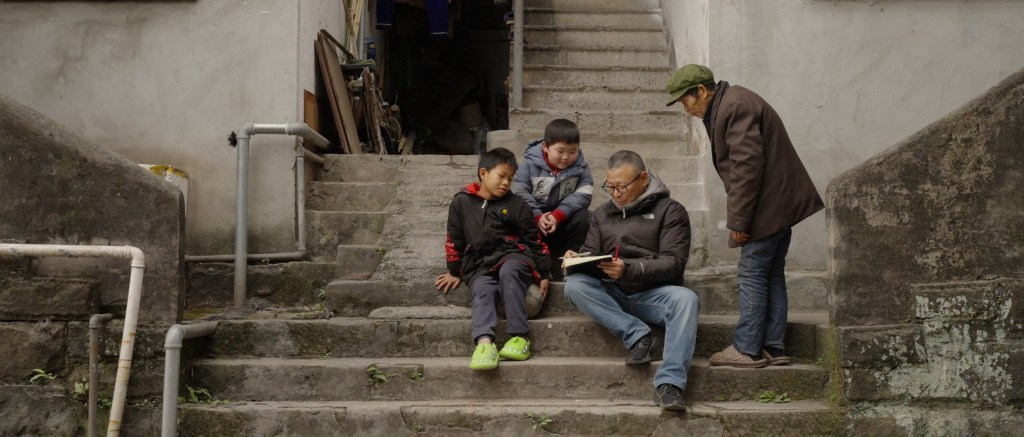
    Since this is a short film and not shot in a vérité style, I didn’t have an excess of footage to sift through. Certain scenes were non-negotiable, and there were individual images I couldn’t bear to leave out. After the rough cut, I shifted my approach to focus on the images themselves. In a somewhat old-school method, I printed out screenshots of each shot and laid them out to see all the ingredients of the film at once (here is a picture of them on my wall at one point). The visual relationships between the images in turn reshaped how I thought about editing and structuring the film. It became less about constructing a linear narrative and more about building a dialogue between the images themselves. 

    AS: I appreciate your generous response and your openness about parts of the production process. I was particularly struck by your intentions with the soundscape. It reminded me of the opening epigraph: “We do not live on soil; rather, we live in time.”

    When I was watching The Other Side of the Mountain, and seeing the shots of Chongqing, I thought of the film Still Life (三峡好人) by Jia Zhangke. Have you seen it? Were you influenced by any artists or filmmakers in the making of this project and how it ‘feels’?

    SYH: I’m glad to hear that you thought of Jia Zhangke’s Still Life, it was definitely on my mind while making this film — his way of framing transient landscapes and everyday gestures as both deeply personal and historically revealing has always resonated with me. I was also inspired by a lineage of films that embrace drifting observation, particularly those by Wim Wenders and Michelangelo Antonioni, where landscapes are not just settings but characters in themselves, holding the weight of time.

    Walter Benjamin’s idea of the flâneur — the wandering observer who reads the city like a text—was also an influence. I think filmmaking, in many ways, mirrors this same kind of wandering. I’ve always wanted to make a film on this kind of embodied knowledge, how to get to “know” through our bodies, movements and perceptions in a space.

    In a different sense, I was also influenced by the tactility of Chinese ink painting, where presence is just as much about the empty spaces as it is about the strokes. This way of seeing influenced the film’s framing and pacing — what remains unsaid or outside the frame can often carry as much weight as what is visible.
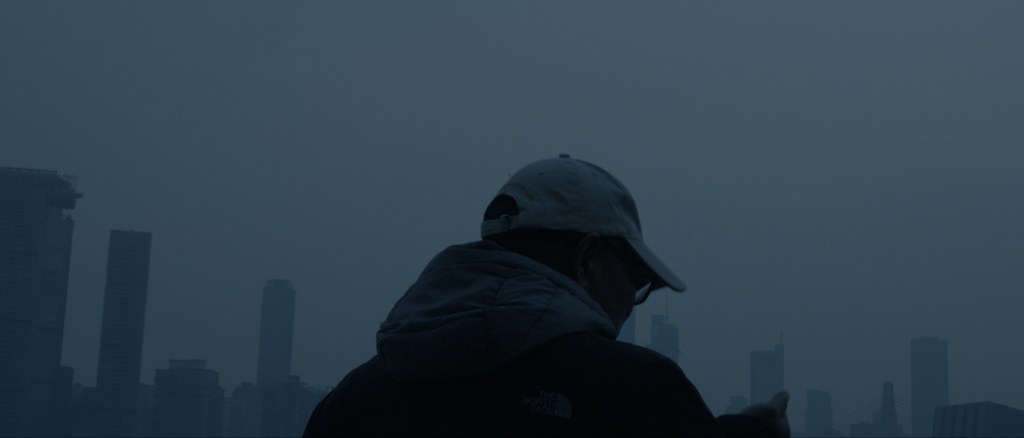
    AS: You’ve alluded to this in a previous answer, but what was it like straddling the line between the personal and the societal in this film? Is this something that you’ve navigated with your past work as well?

    SYH: Every journey is personal, but every road is shared. I’ve started to see the personal and the societal as intertwined rather than separate. The way we move through a city, the memories we attach to spaces, the habits and rituals that shape our days — these are deeply personal, yet they are all informed by larger forces: urban development, migration, erasure. Chongqing is a city in constant flux, where demolition and construction happen simultaneously. Walking through it, you sense an urgency to move forward, but also traces of what lingers. The personal stories in my film are not just personal, they are echoes of a collective experience of living in a place that is constantly changing.

    And we experience history not as an abstract force but through small, seemingly inconsequential moments that are deeply personal. This has been a continuous thread in my work, an attempt to highlight the personal as a way through which history is felt and lived. In previous works like Fortune (2023) and Lacuna (2024, co-directed with Carlo Nasisse), similar to The Other Side of the Mountain, landscapes serve as the sites where the personal and societal intersect.

    AS: When you mention ink painting, I think of those frames when your father is painting what he sees in front of him. In some senses, I see this film as a conversation between the two of you — two artists in search of a way home and a deeper understanding of how past and present are intertwined, how to see things in proportion and perspective. Are there any themes in the film that you’re looking to probe in future work? What are you most looking forward to in the year ahead?

    SYH: I find myself drawn to ambiguous spaces, landscapes in flux — places where history is layered, where past and present are in constant negotiation. I am particularly interested in the emotional and psychological dimensions of urban transformation. How does the way we inhabit space reflect broader social conditions? How do erasure and displacement manifest on both a physical, collective, and personal level? These questions are central to my practice, as is my interest in the past lives of landscapes and their uncertain futures — shaped by climate change, urban development, and shifting social structures. Looking ahead, I am excited to expand my practice beyond documentary film and experiment with different forms of spatial storytelling. I am currently developing both a fiction film and an installation that delve into these themes, while continuing to observe and document urban landscapes as a filmmaker and flâneur in my travels.

    The Other Side of the Mountain premiered at the International Documentary Film Festival Amsterdam (IDFA) in November 2024 and will be screened at other festivals in the coming months. Information about future screenings can be found here.
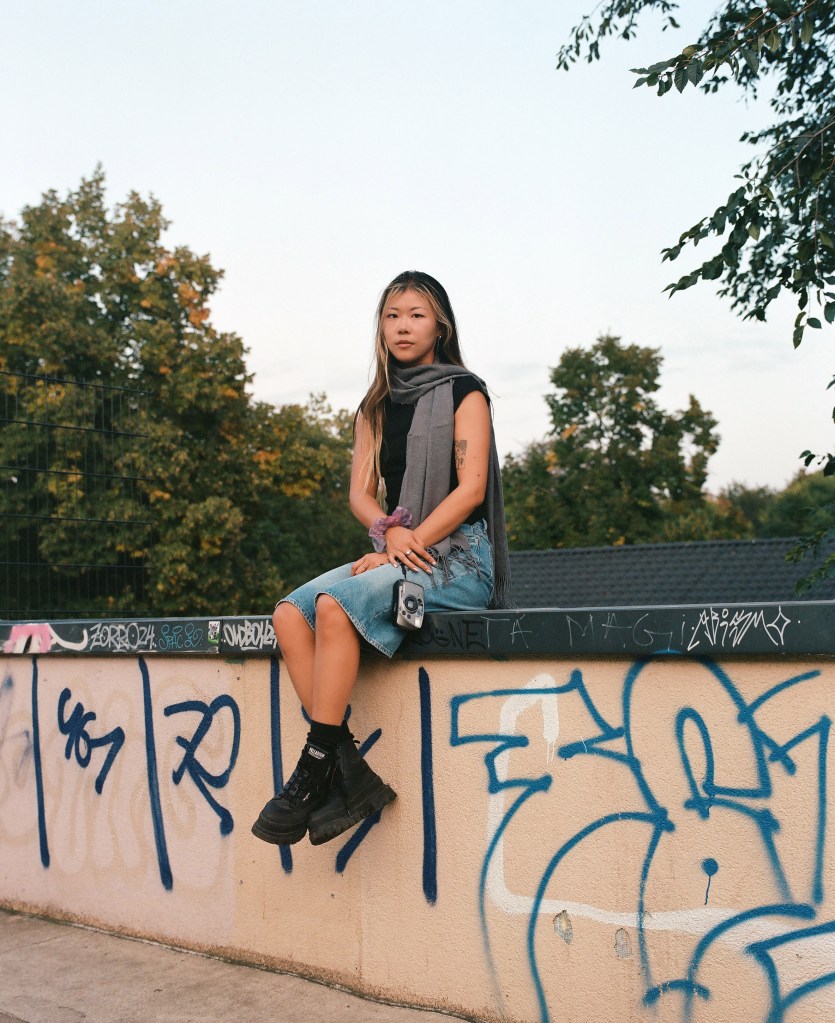
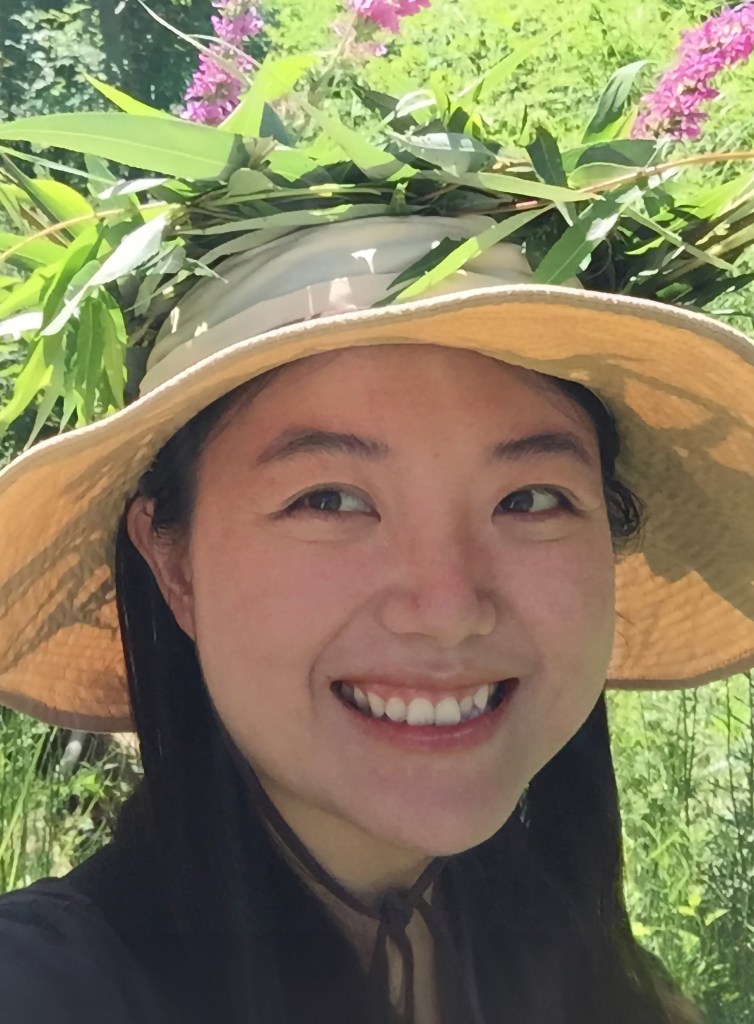
    Shirley Yumeng He, photo by Colin Aherne.

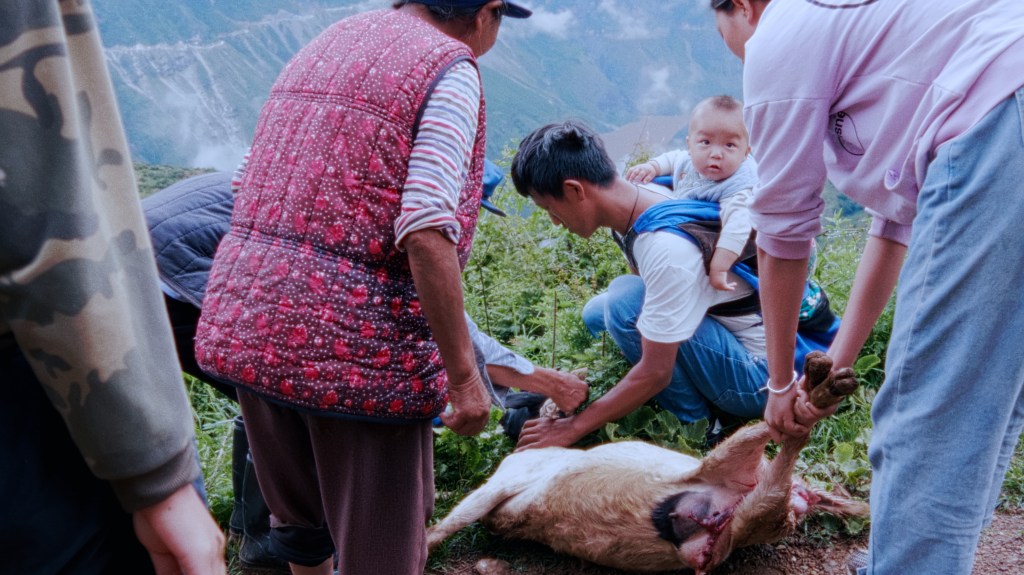
    Stills from The Other Side of the Mountain courtesy of the filmmaker.

  • Vignettes

    I thought I might write something at the end of the year. The year seems special, just as every year seems, like there is no end to the next, only a beginning. There is sentimentality imbued on the last sunset, the last hair wash, the last pledge, last pinch of hunger.

    I was reminded this morning of my favourite word. I’ll share it with you in context. From Moby Dick:

    “What do you see? – Posted like silent sentinels all around the town, stand thousands upon thousands of mortal men fixed in ocean reveries. Some leaning against the spiles; some seated upon pier-heads; some looking over …”

    When Ishmael says, “What does that indignity amount to, weighed, I mean, in the scales of the New Testament?” I wonder if they used to read the New Testament as a story or as a religious text. If the latter, I wonder what the difference is.

    I’m watching Personal Problems (1980) by Ishmael Reed and Bill Gunn. In it, a nurse named Johnnie Mae Brown (Vertamae Smart-Grosvenor) recites poetry she has written in her spare time:

    Still from Personal Problems

    … They say that ebony rumbas, sepia sambas,

    The dance of the colors is so splendid that even

    the lemon-colored sun is dazzled, laid-back, waits her turn …

    So if you are a true believer – that is, if the faith runs river deep

    in your heart – it’s possible in the eyelids of one of these mornings

    that you too will witness this exotic vision, and the wind,

    heady with the perfume of the colors will tickle you.

    Do not laugh – weep – for, from dawn to dusk, anything can happen.

    I shouldn’t be, but I’m touched by the thought of poetry being written in between or after work, when one is tired. Happy poetry being written in the midst of suffering – not one’s own. It shouldn’t be an all-consuming manner of writing, poetry. It seems to me one of distraction, of longing and desire. A person cannot be a poet and nothing else.

    I think of Bessie Head, whose book, When Rain Clouds Gather, also plays on my mind. In “Stars and Saints,” by Lucia Berlin, I came to know a version of myself otherwise hidden from sight.

    “He avoided me completely after that morning, and it wasn’t my imagination. There was no way I could explain that it had all happened so fast, that I wasn’t smiling away at the cats chewing the birds. It was that my happiness about the sweet peas and the finches hadn’t had time to fade.”

    It wasn’t my imagination. In time we realize it’s easier to accept that it isn’t our imagination but it’s also not true. It’s harder to accept that there is no truth – what fun is there in that realization?

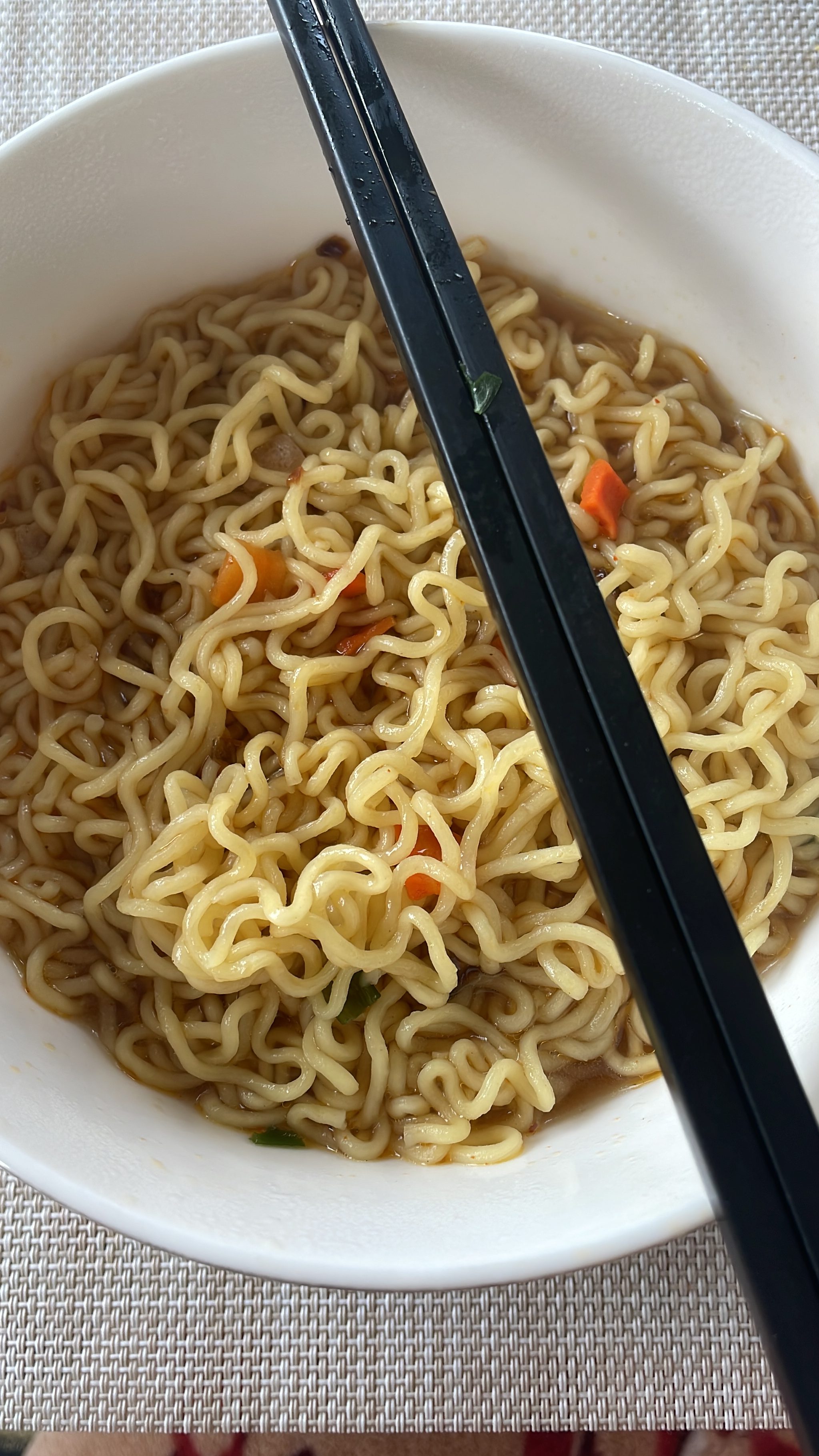
    One of my meals this year

    It’s noon. I take my medicine. I eat lunch. I pour myself some water.

    In “Selections from Journal, 1996,” Lydia Davis writes: “Balance of pursuing desires and abandoning desires. I want all this before I die – and yet I also think we come from nothing and we go into nothing, and earth is only a small thing in the universe – and if you keep this in mind, your desires seem less important.”

    It feels as though I’ve been walking through a meadow for a long time. I had been on a path, some sort of discernible path in the field, and it led me somewhere unfamiliar. Mostly, that’s okay.

    I think I’ll take up running again next year. I searched for the book, What I Talk About When I Talk About Running, by Haruki Murakami in the public library catalogue, but I could only find an audiobook. I remember it being about how he started to write (and run), ran a marathon in Greece in the summer heat, and got through midlife. ‘Pain is inevitable, suffering is optional.’ Something aphoristic like that. And who can know the truth of aphorism?

    In David Lynch’s book, Catching the Big Fish, seemingly toward the end more a missive on transcendental meditation than anything else, there is a chapter called “The Box and the Key,” in which the only words that follow are: I don’t have a clue what those are.” The title of the chapter is in reference to Mulholland Dr, Lynch’s great film. A reminder that we often don’t know what we’re doing, which I think he meant to be somewhat comforting. (But maybe he didn’t intend that at all.)

    I open my mail. The paper is weighty and smells pungent and inky. I bought clothes the day before and they arrived. I’ll return two of the pieces, one of which is a light khaki colour instead of a spring green, the other of which is too small.

    It’s been overcast for a few days, which feel like months. It could have been months. Even though I don’t love the sun, I wish for sunnier days.

  • Precious elements

    I was so pleased to speak with Iranian-Canadian artist Parastoo Anoushahpour for Peripheral Review last year, about her film with Faraz Anoushahpour and Ryan Ferko, entitled The Time That Separates Us. I’m excited to share the piece with you, which you can read in full here. I also recently viewed the group’s newest exhibition at Mercer Union in Toronto, called Lovers’ Wind, which I highly recommend that you see if you’re in the area. It’s on until March 23, 2024.

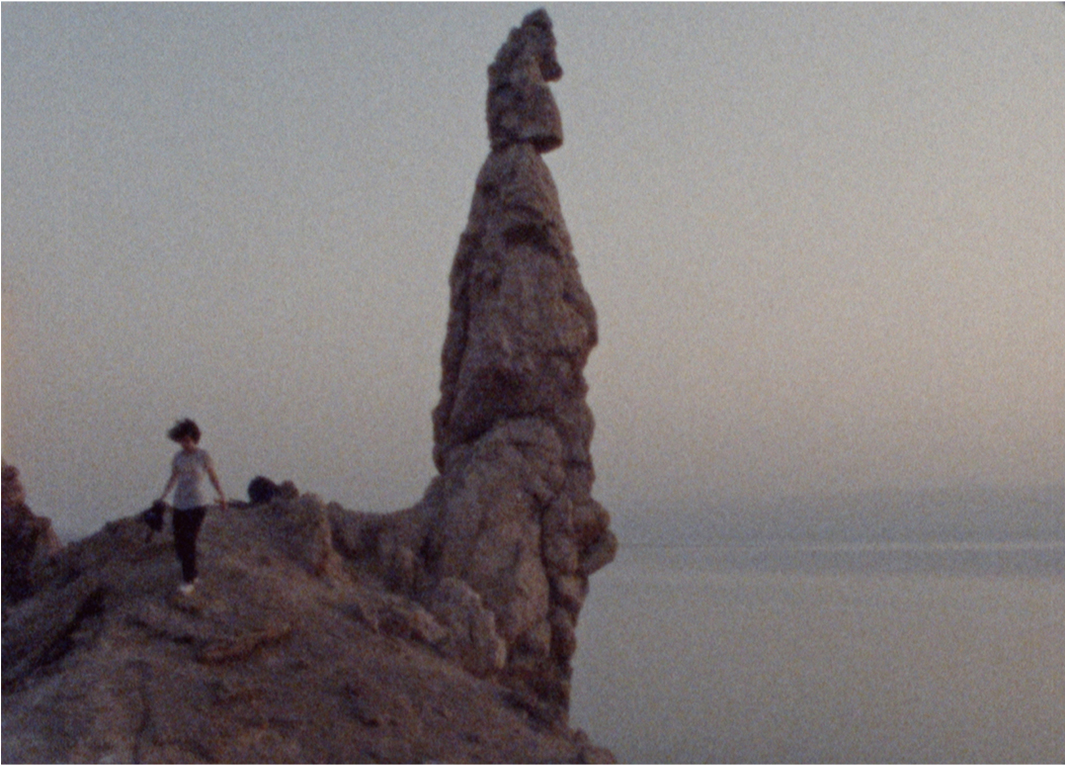
    Still from The Time That Separates Us (2022), courtesy of the artist.

    I can’t say for certain why Parastoo Anoushahpour’s recent film The Time That Separates Us (2022) absorbed my attentions. In the spring, I found myself on the edge of the University of Toronto’s St. George campus in Innis Town Hall, a cinema and lecture theatre. I was compelled to take out my notebook in the dark to record some thoughts: Story of the Ammonites / Lot’s daughters—The key to taking a selfie is to take just one—’Valle’–Yes—There–English—Not everything is meant to be written—All memories become important—A light hand / a Heavy Land.

    As part of a 2023 Images Festival screening series called Passages, Anoushahpour’s film was screened alongside the works of Iranian filmmakers Naghmeh Abbasi, Siavash Yazdanmehr, and Rojin Shafiei. Collectively, these works spoke to each other in Arabic and Farsi, between modes and metaphors. I tried to understand the language between them. Shot in Jordan and Palestine, The Time That Separates Us is grounded in the land and the mythologies around Lot’s Wife and the Pillar of Salt. In the film, an intimacy of thoughtful and honest intentions is foregrounded in the exploration of the film’s subjectivities in a heavily mediated landscape.

    A couple of weeks after the screening, during a trip to New York City, I reached out to Anoushahpour to ask if she would be open to talking about her work. The Toronto-based filmmaker and artist spoke with me from Athens, Greece, where she was at the time. Our conversation meandered between ideas I had sent her in an email, and we spoke about elements of craft and process—not in a way that would explain certain artistic decisions or meanings, but to more insightfully navigate why I came away feeling so touched by her work. 

    Anqi Shen: My immediate response to your film was that its strength lay in the attention given to the unreliability of narrative. I found the graininess at the beginning really satisfying, it just felt so aesthetically beautiful. If there was one word I would use to describe the film, it would probably be “unprecious.” Is that how you see it as well?

    Parastoo Anoushahpour: No, that isn’t a word that comes to mind, but I really like it. I think in some ways, some elements of it are being treated to feel unprecious as opposed to how they’re usually treated—certain narratives that have power and are very rooted in the culture and the landscape—they’re untouchable somehow, and I guess unprecious and untouchable can switch.

    AS: I think what I mean by “unprecious” is that it didn’t seem that everything was pristinely put together. The film came across as personal, and I’m not saying craft wasn’t involved…

    PA: Maybe it’s “unprecious” as opposed to that element of control that comes with craft and goes with a certain kind of narrative. There is a level of giving up control in a way that things come together. It takes you out, it breaks the thing it is trying to say. But I like “unprecious.” For me personally, it was a lot about control, and also even practicing a level of looseness that I don’t usually do in my work with my collective—with Faraz Anoushahpour and Ryan Ferko—we’ve been working together for almost a decade.

    Because of the content and form I was working with for this film, it was important to try to find the balance in keeping the responsibility or authority in stringing these versions of narratives along, even though a lot of the texts and the voices that write some of those texts are people I collaborated with over a long time and they’re very much involved in guiding the direction. Those relationships are important to me, so it was about finding a way to keep that precious, and let that guide the image.

    […]

    Read the full interview at Peripheral Review.

  • ‘Go read’—In conversation with Shasha Li

    Shasha Li’s debut film is a tender and wandering meditation on home and the elements—earth, fire, water, and air. Made over the course of five years and punctuated by world events like wildfires and the pandemic, Heaven Rain Flows Sweetly compares the vitality of nature in Eugene, Oregon with that of Li’s ancestral home in Lijiang, China, at the foothills of the Himalayas.

    Speaking with me in December from Los Angeles, Li told me about the naming of the film, which I was curious about. ‘Heaven Rain Flows Sweetly’ is a translation from Mandarin to English, but the characters in Nakhi are a homophone meaning, ‘Go read.’ In the film, Nakhi glyphs which comprise an ancient writing system that has weathered wind, rain, and many more human-made changes, serve as a gateway to connecting with Li’s ancestry.

    Shasha Li

    Li has had a circuitous path to the film world. She attended business school and became an accountant for a big-four firm in New York City. After some soul searching, Li then changed direction, later studying film at the USC School of Cinema Arts.

    Our interview has been edited for length and clarity.

    Anqi Shen: The soul searching you’ve done comes across in Heaven Rain Flows Sweetly. How did your nomadic experiences influence the making of the film?

    Shasha Li: I can’t tell you how many times I’ve moved in my lifetime. I think it’s a little bit of fate. When I moved back to Lijiang to live with my grandparents as a little kid, that was such a special period of my life. I felt like I went through a time machine and ended up in this timeless, very utopic place. That was a big inspiration for this film, and I also think as I move again and again and see more of the world … the more I realize how special the Lijiang of my dreams and my childhood is. It exacerbates my nostalgia and longing for home.

    AS: I’m from Beijing originally. I moved when I was about three years old. Whenever I go back, I feel like it’s a very different world. It’s almost like a parallel universe.

    SL: That’s what I say!

    AS: One thing I was thinking about was the concept of language in this film. How did you navigate between different languages and dialects, including English?

    SL: I think a lot of it comes naturally when you’re bilingual and a first-generation immigrant. It’s natural to speak English in one scenario, and in my case sometimes I speak Mandarin and sometimes I speak Yunnanese with my family. With my grandma I speak Yunnanese but she also speaks Nakhi sometimes. We did have to decide, in terms of the voiceover, to use both English and Chinese in the process of editing, because for the longest time I was struggling with confronting the footage I had compiled and finding the narrative thread.

    Poster for the film, released in 2023

    AS: I’ve always been drawn to the naming of things. Could you talk about how you decided on the title for your film—Heaven Rain Flows Sweetly?

    
SL: I didn’t decide on the title until pretty late in the process. Earlier on, I really liked the expression, but it doesn’t really roll off the tongue in English. If you start a title with the word, heaven, it immediately has so many layers of connotation and meaning to different people. I was hesitant to use it, but I think when the film actually came together, I thought this was the best title. It was a very open-ended process of filming and a journey of growth for me personally.

    I learned about these Dongba stories that ended up in the film, so for me, that’s kind of like my reading into these ancient stories. … It’s kind of a miracle that this language has survived just like Lijiang has survived thus far, despite the changes.

    Dongba culture itself has so much to do with nature worship. The title of the film, Heaven Rain Flows Sweetly, is a direct translation of the Chinese title, tian yu liu fang, whereas “tian yu liu fang” is a Mandarin homophone of the Nakhi phrase, “go read.” It’s a well-known Nakhi bilingual expression. I think the title implies that reading can nourish the soul just like rain can nourish the earth. I’ve come to see the film as a meditation and an offering to nature, and also a prayer. I think tian yu liu fang can be read in Chinese as a prayer to pray for the appropriate amount of rain that we receive on earth—not too much, not too little. There’s the connotation of hoping for a harmonious relationship with nature. A lot of us don’t really have one anymore.

    Still from Heaven Rain Flows Sweetly courtesy of June June Films

    AS: Thank you, that was such a lovely elaboration of these vignettes from the film that keep coming back to me. I was thinking a lot about Indigenous knowledge and how it’s gone away with our obsession with productivity, with capital.

    In terms of craft, I see that you’re physically present in the scenes with your camera, I can tell that you were very hands on in this film. How did you approach the cinematography?

    SL: The camera was definitely an extension of my own eyes. I shot it and was for the most part was the only one on location. It was almost like I was just hanging out with these people going through these life moments, just having the camera there to record and document those moments.

    I don’t really think about technique when it comes to cinematography. It was great to practice in the first year when I was in Eugene, Oregon. It was activism and environmental meetups, not so much personal, compared to much of the footage that made it into the film. I didn’t think about editing too much during filming, and later it really came around as a major obstacle and steep learning curve. On the other hand, it was a blessing that I was just in the moment, didn’t really think about expectations in terms of conforming to the narrative requirements.

    AS: Were there any surprises you encountered in the course of filming?

    SL: I think all the time, and that’s where the magic happens. For example I love the encounters with animals—the squirrel eating a cherry flower, seeing a falcon or an eagle flying through New York City—I love that, and those are always surprises. I think it’s almost like going fishing in the ocean of reality and seeing what the catch of the day is. That was my way of thinking about cinematography.

    AS: I think the few minutes you have from Oregon in the film really set the stage for the distance and how far you’ve physically come in making the film. Did you get a chance to see the film with a live audience at DOC NYC?

    SL: Yes, I did, and it was so amazing. I really didn’t know how the audience feedback or Q&A was going to be. It definitely played faster in the theatre compared to when I was just editing on my small screen and watching it on my own. During the screening, I was amazed by how there were reactions to all these tiny moments and story beats, for example in the scene where I visit my family home with grandma early on. I was worried that would be slow, but there were so many little giggles about my interaction with my grandma that really told me the audience just got every little nuance.

    AS: What are you working on now?

    SL: I’m working on a few projects, both narrative and documentary. One of my interests is continuing to explore the intersection of nature, traditional culture, and spirituality, which came into focus during the making of Heaven Rain Flows Sweetly.

  • Tautuktavuk

    It took me three sees of Tautuktavuk to understand the film more fully, and still I marvel at what I don’t yet know. I see that the North is spectacular in wide and medium shots, the sun a thumbprint and shimmering orb on fresh, packed snow. Inuit attend to their daily lives—strangers at the door, elders, friends, children and grandchildren—in tender ways that seem so because they are only going about their days. Tenderness shows itself by its nirvana, an awareness and oblivion to oneself.

    Carol Kunnuk and Lucy Tulugarjuk play two sisters, the elder Saqpinak and the younger Uyarak, who live in Igloolik and Montreal, respectively. (In a press briefing, it was noted that the “k” at the end of the word Tautuktavuk “makes it two people’s point of view of the world.”) Separated by more than 2,000 kilmotres during the pandemic, the two sisters catch up and reveal their thoughts and memories to each other through Zoom calls. Uyarak and Saqpinak relay to each other separate traumas and abuses that have brought haunting and hardship to their lives. Uyarak does make the trip north to visit her family when COVID restrictions ease, met with words about the scolding of one in public—how private and public have been kept separate.

    Still from Tautuktavuk courtesy of Isuma Distribution International.

    It’s touching to see tradition with modernity parallel to it. Nature is not a companion or an accessory but a being that inhabits space. This is the way people live. Saqpinak works for a local television station and interviews community members singing ajaajaa songs once considered a “taboo” by the church. The film touches on themes of two-eyed seeing (which stems from the Mi’kmaq term Etuaptmumk, translating to ‘the gift of multiple perspectives’). Western knowledge has in many ways been unwanted, but Western science now innoculates people of Igloolik against the coronavirus. The hesitancy and mistrust is understandable. In the film it is not an irony but a reality, which is hard to do. There’s loving in every facial expression.

    In one of my favourite scenes, Uyarak gets her forearms tattooed at her friend Beatrice’s home. You can hear the needle going in the skin. It doesn’t hurt, Uyarak says, but you can see emotion swelling. “I am feeling proud,” she says. Her mother was threatened by religious authorities who banned tattoos, an integral part of Inuit culture. Time passes quickly — all done already, Uyarak remarks. Yet we do not see this manner in which time passes in film that permeates the mainstream.

    Tautuktavuk won the Amplify Voices Award for Best BIPOC Canadian First Feature film at TIFF and the 2023 Sun Jury Award at imagineNATIVE Film + Media Arts Festival this fall. It has also been named one of TIFF’s Canada’s Top 10 films this year. Tautuktavuk tells viewers of the impact COVID has had on 22 communities in Nunavut: its isolating effect, how reports of domestic violence rose, the health effects of exposures to the virus. Carefully, with craft, the film also considers isolation and grief in a more global way.

    People have described the film as a hybrid, blending reality and fiction. In my view, the film considers what it means to have thoughts and feelings heightened through speech. “I dreamt I was running and it felt so real,” Uyarak says to Saqpinak. What is true—which can be phantom, inexplicable—becomes adjacent to one’s emotional reality, how one copes with it through the telling of events in the mind and in the flesh. It is perhaps most important whom one chooses to confide in and how they respond.

    I spoke with co-director Lucy Tulugarjuk this fall, shortly after Tautuktavuk had its world premiere at TIFF and played at the Atlantic International Film Festival in Halifax, N.S. If you are interested in reading more about the production and behind the scenes of the film, whose cast compromises non-professional actors, you can find it on Inuit Art Quarterly’s website.

  • Heaven Rain Flows Sweetly

    A decade ago, one would be forgiven to think ash can’t be mistaken for rain in Oregon, but the documentary Heaven Rain Flows Sweetly renders real this possibility. The debut film by Nakhi-Chinese director Shasha Li begins with fire. Wildfires that consumed parts of the western US in September 2020, its parallels with raging fires in the Amazon and Australia. The force of fire, how unforgiving it is in its wrath, then juxtaposed with the respect and deference the Nakhi, an ethnic minority in China, have for this element.

    In a swift move, we are in Li’s ancestral home in Lijiang, China, and in Nakhi villages nearby in the southwestern province of Yunnan. Painterly shots of wide expanses of road and forest in the US and lush river valleys in the foothills of the Himalayas take us there. Heaven Rain Flows Sweetly moves as a circadian clock or a hand-crank music box, letting the sound of drumming, synth beats, rippling water and breathless hiking, intertwine to produce a sense of movement.

    Still from Heaven Rain Falls Sweetly courtesy of June June Films.

    In considering how tourism has transformed Lijiang’s Old Town, which was declared a UNESCO World Cultural Heritage Site, the film also depicts the contrast between Indigenous ways of being and the pace of development giving way to a changing of hands when it comes to property ownership.

    Water is another element that rules in the film. It is there in various states—standing water coloured by dusk, the glistening of creek water that can be taken in a leaf, the rosy, cloudy canals that show the mark of industry. In Heaven Rain Flows Sweetly, Li asks us to consider the displacement of rural life for urbanness—what it means to create a space to call ‘home’ and to be ornate, as two peonies in a garden. The camera almost turns in on itself—a thoughtful arrangement of what is natural—embodying Li and her kin’s ancestral rituals. The dexterity of the camera, charmingly unwieldy at times, creates a sense of care in its observation and prosaic vignettes.

    Still courtesy of June June Films.

    Throughout the film, made during the pandemic, we see Li’s reflections on her uprootedness and nomadism, “worshipping at the shrine of the New World,” as she puts it, meaning in New York City. Views oscillate between a glinting NYC skyline and a quaint farmscape in southwestern Yunnan. Three languages—English, Mandarin, and Nakhi—weave together a soulful narrative about the home we try not to forget. Heaven Rain Flows Sweetly oozes candor and the sweetness of community, even in moments that eschew the familiar in favour of the distant, echoing divine.

    Heaven Rain Flows Sweetly had its world premiere at DOC NYC, which ran from November 12-26, 2023.

  • The Taste of Mango

    Fibrous flesh tearing, metallic dissonance: I was reading the captioning provided in The Taste of Mango, a feature film by British-Sri Lankan director Chloe Abrahams which played at the Toronto Reel Asian International Film Festival in early November. I wanted to know more than just what I could see and hear, and the captions helped with that. Words help, and they make another appearance in epistolary form, but there’s inevitably more I think I don’t understand.

    The Taste of Mango is a beautifully made film, but it resists the saccharinity of beauty, mediates on its usefulness in bringing about a picture. Metaphors abound almost effortlessly: the revolutions of a wheel and its spokes on hard pavement, the slicing of mango near the pit. But there’s the labour of love and care that settles on the mantle—the sound of a voice in various stages of admiration and lament. The speed of the film moves like the body of a whale, taking you to the depths of the ocean, and back up again for a moment. There’s the suggestion of tears, and then the sea glistening with sun-tipped waves. There’s the evocation of mangoes, and bright yellow on the backs of nails.

    In one generation (Chloe, her mother Rozana and Rozana’s mother Jean) we see a line drawn through by sexual violence, an unerasable line that almost becomes a fissure but instead becomes, like Braille, embossed and unintelligible except to those who know how to read it. Abrahams has made an intricate, grounding film about her longing for closure and resolution in Rozana and Jean’s relationship, as they invite Jean to their home in London, UK, where they celebrate a birthday, and with Chloe visiting her in Colombo, Sri Lanka. Home videos of their present lives, Rozana’s wedding years ago, and the life that she lives, encircle the revelations of years past.

    Still from The Taste of Mango, courtesy of Reel Asian.

    The Taste of Mango began as a short film. As the story expanded to not only include the relationship between the director and her grandmother but Abrahams’s own story in relation to her maternal lineage, the piece began to take hold in a much different way, through the work of thoughtful edits and a camcorder whose adroit use and recognizable drone runs through the piece. The result is a documentary with imagistic, experimental elements that elevate its vantage from being purely observational to being transformative, moving you through the verse of country music, light-hearted and ironic frames, happy and sad all at once.