
• Vignettes

    I thought I might write something at the end of the year. The year seems special, just as every year seems, like there is no end to the next, only a beginning. There is sentimentality imbued on the last sunset, the last hair wash, the last pledge, last pinch of hunger.

    I was reminded this morning of my favourite word. I’ll share it with you in context. From Moby Dick:

    “What do you see? – Posted like silent sentinels all around the town, stand thousands upon thousands of mortal men fixed in ocean reveries. Some leaning against the spiles; some seated upon pier-heads; some looking over …”

    When Ishmael says, “What does that indignity amount to, weighed, I mean, in the scales of the New Testament?” I wonder if they used to read the New Testament as a story or as a religious text. If the latter, I wonder what the difference is.

    I’m watching Personal Problems (1980) by Ishmael Reed and Bill Gunn. In it, a nurse named Johnnie Mae Brown (Vertamae Smart-Grosvenor) recites poetry she has written in her spare time:

    Still from Personal Problems

    … They say that ebony rumbas, sepia sambas,

    The dance of the colors is so splendid that even

    the lemon-colored sun is dazzled, laid-back, waits her turn …

    So if you are a true believer – that is, if the faith runs river deep

    in your heart – it’s possible in the eyelids of one of these mornings

    that you too will witness this exotic vision, and the wind,

    heady with the perfume of the colors will tickle you.

    Do not laugh – weep – for, from dawn to dusk, anything can happen.

    I shouldn’t be, but I’m touched by the thought of poetry being written in between or after work, when one is tired. Happy poetry being written in the midst of suffering – not one’s own. It shouldn’t be an all-consuming manner of writing, poetry. It seems to me one of distraction, of longing and desire. A person cannot be a poet and nothing else.

    I think of Bessie Head, whose book, When Rain Clouds Gather, also plays on my mind. In “Stars and Saints,” by Lucia Berlin, I came to know a version of myself otherwise hidden from sight.

    “He avoided me completely after that morning, and it wasn’t my imagination. There was no way I could explain that it had all happened so fast, that I wasn’t smiling away at the cats chewing the birds. It was that my happiness about the sweet peas and the finches hadn’t had time to fade.”

    It wasn’t my imagination. In time we realize it’s easier to accept that it isn’t our imagination but it’s also not true. It’s harder to accept that there is no truth – what fun is there in that realization?
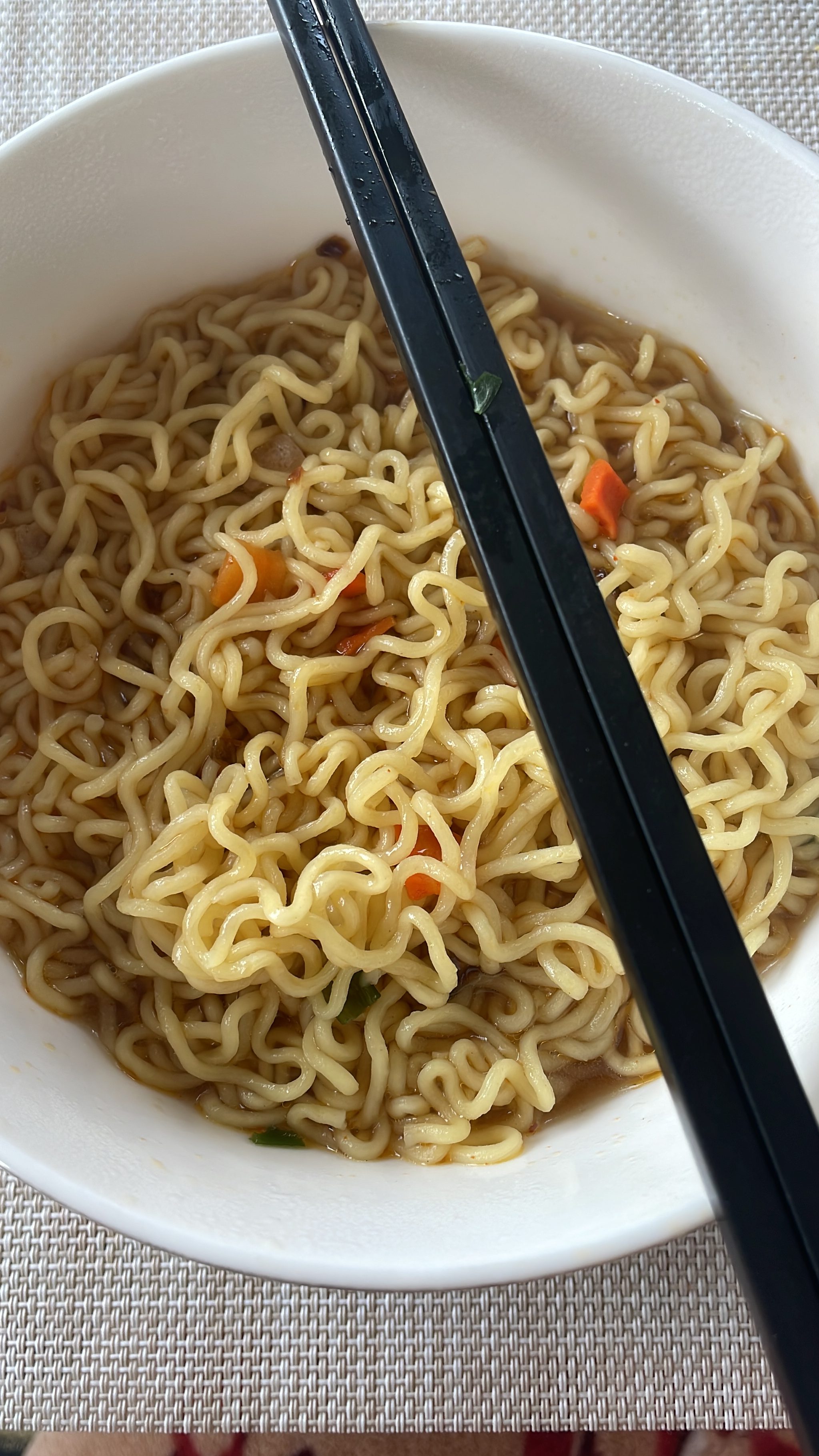
    One of my meals this year

    It’s noon. I take my medicine. I eat lunch. I pour myself some water.

    In “Selections from Journal, 1996,” Lydia Davis writes: “Balance of pursuing desires and abandoning desires. I want all this before I die – and yet I also think we come from nothing and we go into nothing, and earth is only a small thing in the universe – and if you keep this in mind, your desires seem less important.”

    It feels as though I’ve been walking through a meadow for a long time. I had been on a path, some sort of discernible path in the field, and it led me somewhere unfamiliar. Mostly, that’s okay.

    I think I’ll take up running again next year. I searched for the book, What I Talk About When I Talk About Running, by Haruki Murakami in the public library catalogue, but I could only find an audiobook. I remember it being about how he started to write (and run), ran a marathon in Greece in the summer heat, and got through midlife. ‘Pain is inevitable, suffering is optional.’ Something aphoristic like that. And who can know the truth of aphorism?

    In David Lynch’s book, Catching the Big Fish, seemingly toward the end more a missive on transcendental meditation than anything else, there is a chapter called “The Box and the Key,” in which the only words that follow are: I don’t have a clue what those are.” The title of the chapter is in reference to Mulholland Dr, Lynch’s great film. A reminder that we often don’t know what we’re doing, which I think he meant to be somewhat comforting. (But maybe he didn’t intend that at all.)

    I open my mail. The paper is weighty and smells pungent and inky. I bought clothes the day before and they arrived. I’ll return two of the pieces, one of which is a light khaki colour instead of a spring green, the other of which is too small.

    It’s been overcast for a few days, which feel like months. It could have been months. Even though I don’t love the sun, I wish for sunnier days.
  • Withrow Park

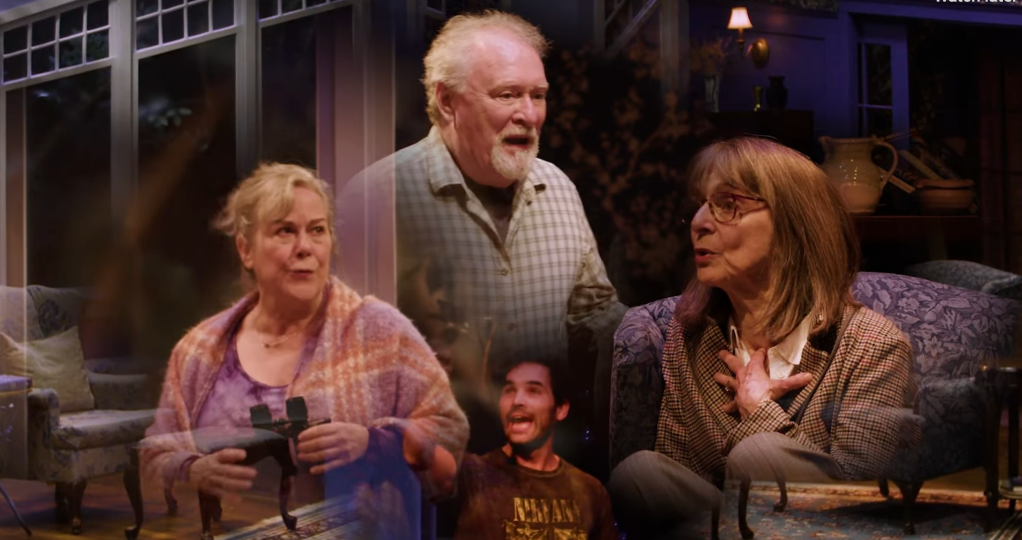
    A friend and I recently drove mostly local out to Tarragon Theatre from Mississauga, braving the wet evening cold to make it to our seats early. Patrons trickled in with an air of good humour and cheer – beers, wines, and concession snacks in hand. The eeriness of the set made for great anticipation for two people who don’t always like to have expectations of the shows they see.

    Withrow Park, named after the park on the cusp of east-end Toronto, written by Morris Panych and brought to the stage by Jackie Maxwell and crew, had the audience’s attention for an hour and 45 minutes including an intermission. Arthur (Benedict Campbell) and Janet (Nancy Palk), a divorced elderly couple live together with Janet’s sister Marion (Corrine Koslo). When a stranger, Simon (Johnathan Sousa), shows up at their door, they debate the authenticity of his story (he’s new to the neighbourhood) and take turns trading remarks about his charm and trustworthiness.

    Still from Tarragon Theatre on YouTube

    As the quips go back and forth within the walls of the house overlooking Withrow Park, where public mischief can be seen by the characters from inside its windows, tensions seep through the narrative, foregrounding Arthur’s sexuality and Marion’s struggles with her mental health, lonelinesses and a xenophobia that creeps into the shroud of humour. Is Simon’s presence a dream? What distinguishes reality from delusion or wishful thinking? Who will care for you when you need it most?

    You can feel the elevated mood fizzle and sink, drift upward again like wind in a shaft, then settle again. A deceptively complex play – which takes place in the seniors’ downstairs living room and foyer of their house but involves an intricate set of props and cues – Withrow Park winds its way into the soul through laughter, and once there, meditates on the fickleness of life: regrets, capricious romances, circuitous paths, and the uncertainty time brings as it moves unevenly forward.

    Withrow Park has been extended until December 10, 2023 at Tarragon Theatre in Toronto.

  • Night Journey

    “When I think of a Taeko Kōno story,” writes Gabe Habash in a Paris Review article, “I picture a glass filling with liquid.” He’s writing about Kōno’s short story collection, Toddler Hunting and Other Stories, translated by Lucy North and republished by New Directions in 2018. “As the story reaches its end, the glass is filled to the brim,” he writes. “But in the final moment, the liquid spills over the side and lands on the surface below. That new plane, something that we hadn’t even considered before, is now—surprisingly yet inevitably—stained.”

    From time to time, I revisit Habash’s review, if not for that picture of the glass and its liquid, then for the way it calculates the peculiar, unfinished endings of the stories in Toddler Hunting. The first story, “Night Journey,” is illuminated by what is later referred to in another story as an “unusual excitement.” There’s the familiarity of a couple bantering back and forth about what to do on a starry night, and then leaving the relative safety of their home to check up on their friends, who are due to visit but don’t show up. It’s suspense that fills this glass, and a sense of an ominous ending until it arrives: “Fukuko realized that she’d been in a particular mood for some time now, a mood that would keep her walking beside Murao into the night, walking on and on until they became the perpetrators—or the victims—of some unpredictable crime.”

    Habash’s review is strong for all the characteristics of a good review: descriptive, observant, and committed to unravelling what exactly is at the core of the stories taken as a collection, and one story in particular. “How could these last seven pages of night wandering be so frightening?” he asks. “It’s because we don’t get an answer for why this is happening. … The original goal of the story—to spend time with Utako and Saeki and, we assume, switch partners—has been disrupted, forcing Fukuko and Murao in a different direction. But what are they hoping to find?”

    The language of the stories is so remarkably strange and candid at the same time, that it reads as if it must have always been translated. It must have changed hands but been of its own volition at the same time. The wandering tenses of the story seem perfect extensions of the moods they convey. The simple past tense will slide into the past perfect, and then the subjunctive, in sentences that are sharp as much as they elide into winding staircases. The stories each have their own “present,” in which events unfold willingly and without much fuss, and a more objective standpoint from which the events are observed, often by a narrator or an interior voice of a main character.

    In “Theater,” for example, this ironic aloofness casts a shadow over the seemingly mundane events of the story in which a woman becomes fascinated with a hunchback and his beautiful wife. “Hideko soon became a frequent visitor at the house of the hunchback and his wife. She devoted herself to becoming their friend. She had never met a real man or woman before, she relized. Compared to them, anyone else was just a generic human being.” In the title story, “Toddler Hunting,” Akiko, an “unmarried woman past thirty” who detests young girls and adores little boys, confronts her disturbing obsessions: “Little boys inhabited such an infinitely wholesome world—Akiko always had the impression that it restored and purified her. … Little boys went along with her in her games—sometimes they almost seemed to egg her on.”

    Habash credits Kōno with writing with the intent to subvert the traditional idea that wives in Japan were submissive to their husbands. Indeed, in many of the stories, there is the unspoken sense that masculine power is being subverted and reconfigured in eerie ways. There is an eroticism underlying some of the stories, such as “Toddler Hunting” and “Night Journey,” in which the narrator knows something that the characters don’t about themselves, something which is revealed to the reader in due time and usually involves their malleable sexuality. Many of the protagonists are unmarried women, no doubt also a sign of rebellion in the times the stories were written, between 1961 and 1969. As Habash writes, “In Kōno’s stories, in which sex, power, and desire are all intertwined, the desire of the protagonists, all of them women, is so powerful that it topples their lives and their carefully constructed circumstances.”